
Our second tracker follows the bets startups make, not the advice they get.
On a daily basis, I come across anywhere from five to ten or more new startups doing something interesting and novel. I see them in the news, on social media, on the web and in my email. All of these entrepreneurs are building really cool and useful things, and some of them might succeed.
Naturally, I can't keep up with all of this global activity, and almost no one can. It is an extremely useful stream of data and information that is just passing by. So we decided to capture it one small step at a time.
From what leaders say to what startups do
Growth is a search problem. Every growth framework is a search, and each one looks in a different place. Our first tracker, Growth Search Signals, collects what influential CEOs, investors and accelerators say about where to look for growth, and sorts each statement by where the search starts: Demand Pull, Supply Push, Technology Push or Resource Expansion.
The first release was clear about one thing. None of the 11 classified statements from CEOs and investors pointed to Resource Expansion, the frame that starts from what you already own or can access. One of Y Combinator's 13 requests did.
Advice is one thing. Bets are another. A bet is what a company actually does with its money, people and products. Today we are launching Startup Growth Bets, a tracker of where startups are actually searching for growth: as new entrants, when they expand, and when they pivot. Each entry is a recent, dated move, linked to its source and sorted into the same four frames.
How we picked the first 25
Release 1 holds 25 companies. Ten are US unicorns from the CB Insights unicorn list, valued at $50 billion or less and unicorns for 10 years or less: Bilt, Inflection AI, Kalshi, Replit, Skims, Substack, Suno, Superhuman, Whoop and Zipline. The other 15 come from recent funding and pivot news, the Forbes Next Billion-Dollar Startups list and the a16z portfolio. They span health care, finance, entertainment, consumer brands, robotics, climate, waste and more.
Startups move fast and dated information is likely to be wrong. Some of these companies are several years old, so we built every entry around something that happened in the last two or three months. Each one went through two rounds of fact-checking before I reviewed it.
Large scale-ups like Stripe or Databricks don't belong here. They will go into our incumbent tracker, which is coming next.
What the first release shows
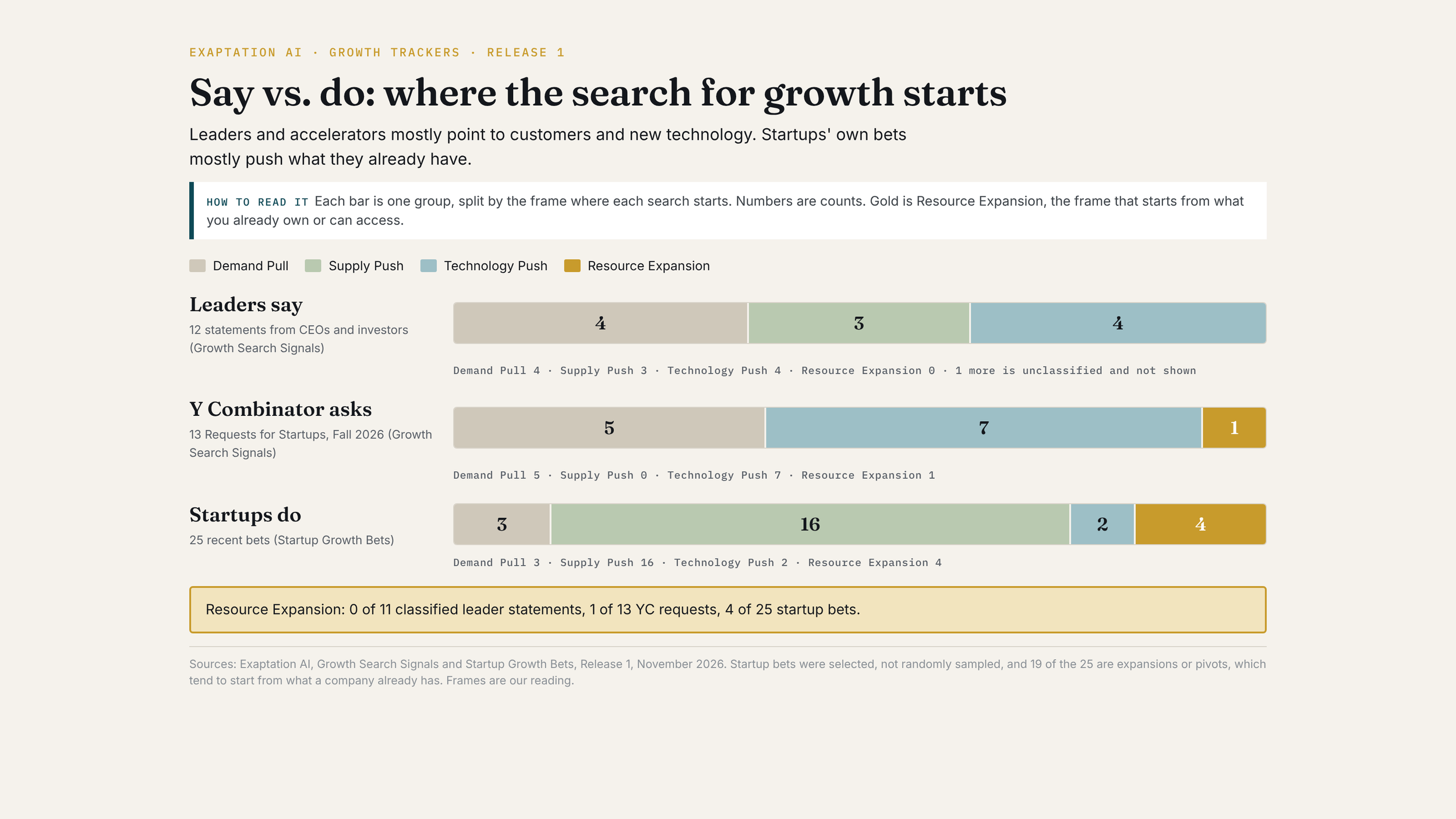
Figure 1: Say vs. do: where the search for growth starts.
Each bar is one group, split by the frame where each search starts. Numbers are counts. Gold is Resource Expansion.
Leaders mostly point to customers and new technology. Startups mostly push what they already have. Sixteen of the 25 bets are Supply Push: the company takes something it already makes or does well and pushes it into new markets, products or business models. Three start from what customers want, two from a new technology, and four from Resource Expansion.
One caution before reading too much into that. These 25 were selected, not randomly sampled, and 19 of them are expansions or pivots. A company that is expanding usually starts from what is already working, so Supply Push should show up often. The more telling number is the gold one. Four of 25 startup bets start from Resource Expansion, compared with none of the leaders' statements.
Expand, pivot, or both
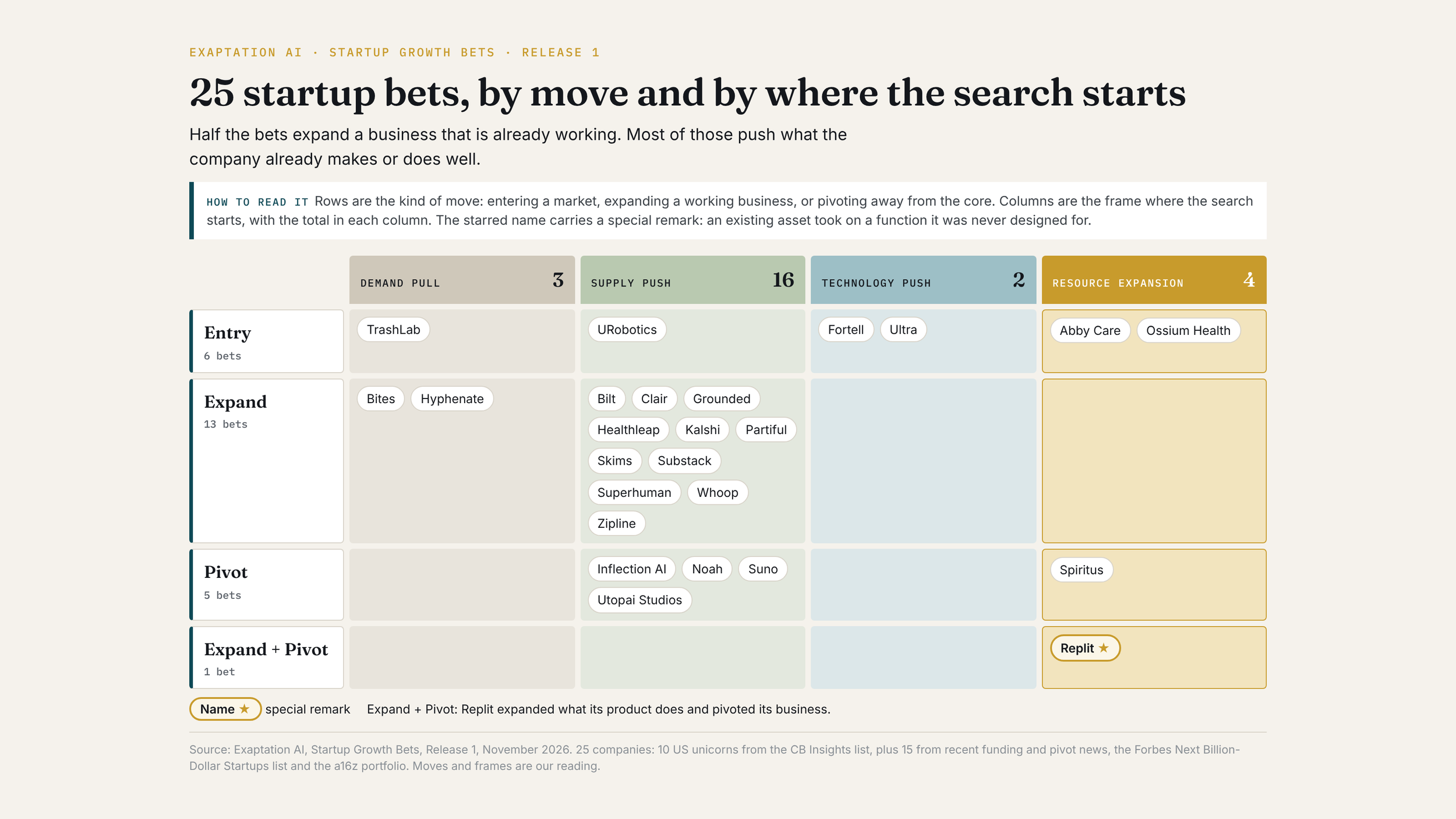
Figure 2: 25 startup bets, by move and by where the search starts.
Rows are the kind of move, columns are the frame, with the total in each column. The starred name (Replit) carries a special remark.
We also label each bet by the kind of move. An entry is a young company's first big bet in a market. An expansion keeps the core business and grows the scope. A pivot changes the core or drops it. Half of the 25 bets are expansions, and 11 of those 13 push what the company already does.
Zipline is a good example of an expansion. Its drone network was built to deliver blood and medicine in Rwanda. In November, it raised $1.5 billion and announced a Walmart deal for 300 more drone sites in the US. Same delivery function, a much bigger market.
The pivots are more varied. Noah started as a consumer bitcoin banking app and now runs stablecoin payment rails for other firms, including a planned payout service with Western Union. Spiritus was founded to capture carbon dioxide from the air and bury it. It now plans to sell that carbon dioxide to oil producers for enhanced oil recovery. Inflection AI went from a consumer companion to enterprise services and back again in three years.
Two entries show what Resource Expansion looks like in practice. Ossium Health banks bone marrow from the vertebrae of deceased organ donors, marrow that used to go unused, and has supplied it for 29 transplants. Abby Care trains and pays family members who were already caring for relatives at home, turning unpaid work into a certified Medicaid service.
The special remark: Replit
Based on this early information, we are not in a position to say whether a new entrant or a pivot has given any of its resources a new, emergent function. That takes time and evidence. So the tracker does not judge it row by row.
In rare cases where a pivot, a new entry like Google Search, or a business expansion like Uber Eats is clearly an exaptation, we say so separately, in a special remark. Release 1 has one.
Replit started as a browser-based place to learn to code, where code runs and ships in one place. After AI tools arrived around 2022 and 2023, Amjad Masad pivoted the company toward AI agents. The environment Replit had spent years building took on a new function: turning plain-English requests into working, deployed software. People still code by hand on Replit too. We label it Expand (function) + Pivot (business), because both happened at once.
One special remark out of 25 is about what we expected. We will report how many we find at 50 bets, whatever it shows.
What the tracker is, and isn't
Most figures in the tracker come from the companies themselves, and we say so in each entry. Frames and move labels are our reading, and they will change as the data grows. Some labels are not always clean for each firm, and we would rather show the work in progress than force every company into a neat box.
We are also not a neutral party. We build tools for the fourth frame, so everything is in the open to disagree with and debate. Every entry ends with an ExAI note and where we would start, named from our own library of causes and exaptation experiments.
What comes next
We will update Startup Growth Bets about every two weeks. Next comes our third tracker, of large incumbents: where established firms are searching for their next stage of growth, and whether exaptation can add value for them. Incumbents are far more likely to be resource-rich and high on functional fixedness. That makes the exaptation frame a new way for them to search for asymmetric growth.
Three trackers, three views of the same search: where leaders say to look, where startups place their bets, and where incumbents go next.
See the tracker: Startup Growth Bets. Compare it with what leaders say: link to Growth Search Signals.
We are building the AI search engine for every asset's undiscovered functions.